Zellige tiles represent one of the most remarkable intersection points between historical craftsmanship and contemporary interior design. Originating in Fez, Morocco, during the 10th century, these handcrafted clay tiles are celebrated for their non-uniform surfaces, subtle tone variations, chiseled edges, and brilliant enamel glazes. Unlike machine-molded porcelain or ceramic tiles, no two Zellige tiles are identical. This innate imperfection reflects light across kitchen walls in soft, prismatic hues, turning standard backsplashes, islands, and accent walls into living artistic installations.
Modern kitchen design increasingly favors organic textures, warmth, and individuality over sterile uniformity. Integrating Zellige tiles into your kitchen brings unmatched depth, tactility, and artisanal charm. Below is a comprehensive guide featuring 20 distinct Zellige tile kitchen concepts, complete with detailed breakdowns of what each design entails, how to execute it, and professional tips and variations to customize the look.
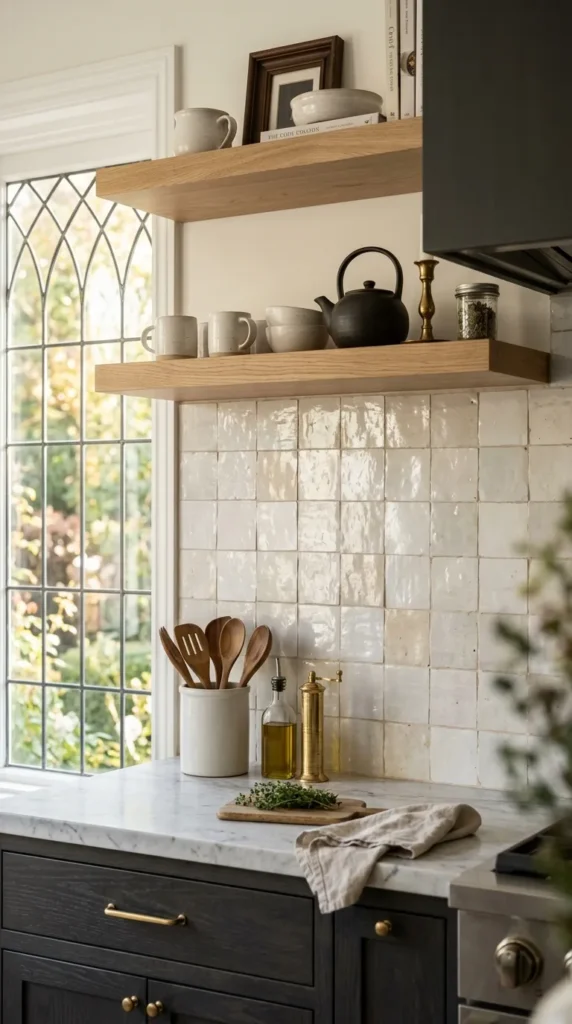
1. Handcrafted Square Snow White Zellige Backsplash
What This Idea Means
The classic square white Zellige tile backsplash redefines the timeless white kitchen. Instead of flat subway tile, standard 4×4-inch Snow White Zellige tiles introduce rich variations in shade—ranging from soft alabaster and chalk to warm cream and subtle ice blue undertones. The light bounces off uneven glaze pockets, giving a clean kitchen an organic, luminescent warmth.
How to Make It
- Surface Preparation: Ensure the backing wall is completely smooth, rigid, and protected with a waterproof cement board or anti-fracture membrane.
- Layout Planning: Lay tiles out on the floor first to mix light and dark shade variations evenly across the wall rather than creating dark patches.
- Installation: Apply a white polymer-modified thin-set mortar using a 1/4-inch square-notched trowel. Butt the tiles as tightly as possible, maintaining minimal grout lines (1/16 inch or less) to preserve the continuous handcrafted surface appearance.
- Grouting & Sealing: Use a non-sanded grout in soft white or light alabaster. Seal raw chiseled tile edges before grouting to avoid stain absorption.
Tips and Variations
- Grout Contrast: Opt for a pale grey grout to emphasize individual tile edges and highlight handcrafted variations, or stick to white grout for a seamless glaze reflection.
- Countertop Pairing: Pair with white oak open shelves, honed Carrera marble, or matte soapstone countertops for a harmonious tactile balance.