Transforming a child’s bedroom into a magical, nurturing, and aesthetically pleasing sanctuary is one of the most rewarding creative projects a parent or designer can undertake. A child’s room is more than just a place to sleep; it is a developmental landscape, a cozy retreat for reading, a creative studio for imaginative play, and a comforting cocoon after a long day of discovery. Choosing the right color palette lays the psychological and visual foundation for this multifaceted space.
Moving away from the overly saturated primary colors of the past, contemporary kids’ room design leans into sophisticated, soothing, and deeply engaging palettes that grow with your child. Whether you are aiming for a serene Scandinavian minimalist haven, a whimsical bohemian jungle, or a dreamy celestial observatory, the colors you select dictate the mood and functionality of the room.
The Psychology of Kids’ Room Colors Color profoundly impacts human emotion, behavior, and physiological states, making it especially influential in a child’s environment. Warmer tones like soft terracottas, muted mustards, and warm blushes stimulate creativity, foster feelings of safety, and evoke a sense of organic warmth. Cooler hues such as sage green, dusty blue, and misty gray promote calmness, lower heart rates, and create a restful atmosphere ideal for sleep and deep focus. Balancing these tones ensures the room remains dynamic yet restful, preventing sensory overload while still sparking curiosity and joy.
Foundational Design Principles Designing an aesthetic kids’ room requires a delicate balance between visual appeal and practical longevity. Children grow remarkably fast, and a room painted in hyper-specific toddler themes can quickly feel dated or require a complete overhaul. To achieve a Pinterest-worthy, timeless aesthetic, adopt the 60-30-10 color rule. Dedicate 60 percent of the room to a dominant, neutral or soft base color (like warm linen, soft ivory, or muted greige) to keep the space feeling light and airy. Use 30 percent for your secondary palette color on larger accents, furniture, or an accent wall. Reserve the final 10 percent for punchy, delightful accent tones introduced through textiles, art prints, and decorative accessories.
20 Aesthetic, Amazing, Gorgeous Kids Room Color Palettes
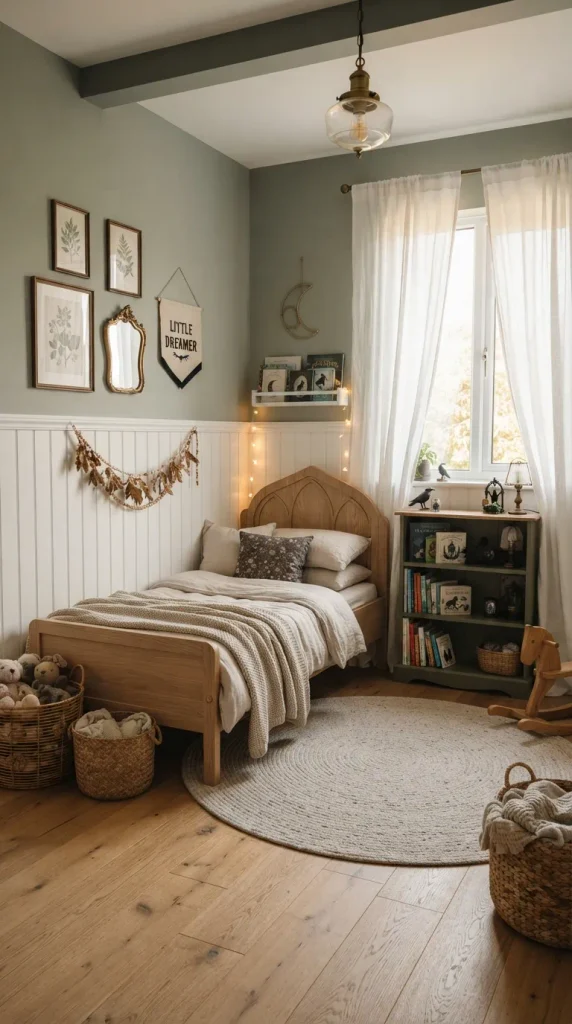
1. Sage Serenity
- The Palette: Muted sage green, crisp chalk white, oatmeal beige, and subtle hints of matte black.
- The Vibe: Grounded, earthy, and deeply calming, this palette brings the tranquility of nature indoors. It creates an organic, stress-free zone that encourages quiet focus and peaceful slumber.
- How to Make It: Paint the lower half of the walls in a soft sage green beadboard or wainscoting, keeping the upper walls a warm chalk white. Incorporate natural light oak furniture, woven rattan storage baskets, and organic linen bedding in oatmeal. Ground the room with a plush, neutral wool rug.
- Variations: Swap the crisp white for a warm buttery cream to amplify the softness, or add brass hardware for a touch of subtle vintage elegance.
2. Sunset Blush & Terracotta